
World Mental Health Day 2026: Why lived experience matters
This World Mental Health Day, we explore why being heard by someone who's been there matters, and what the evidence says about peer support.

This World Mental Health Day, we explore why being heard by someone who's been there matters, and what the evidence says about peer support.
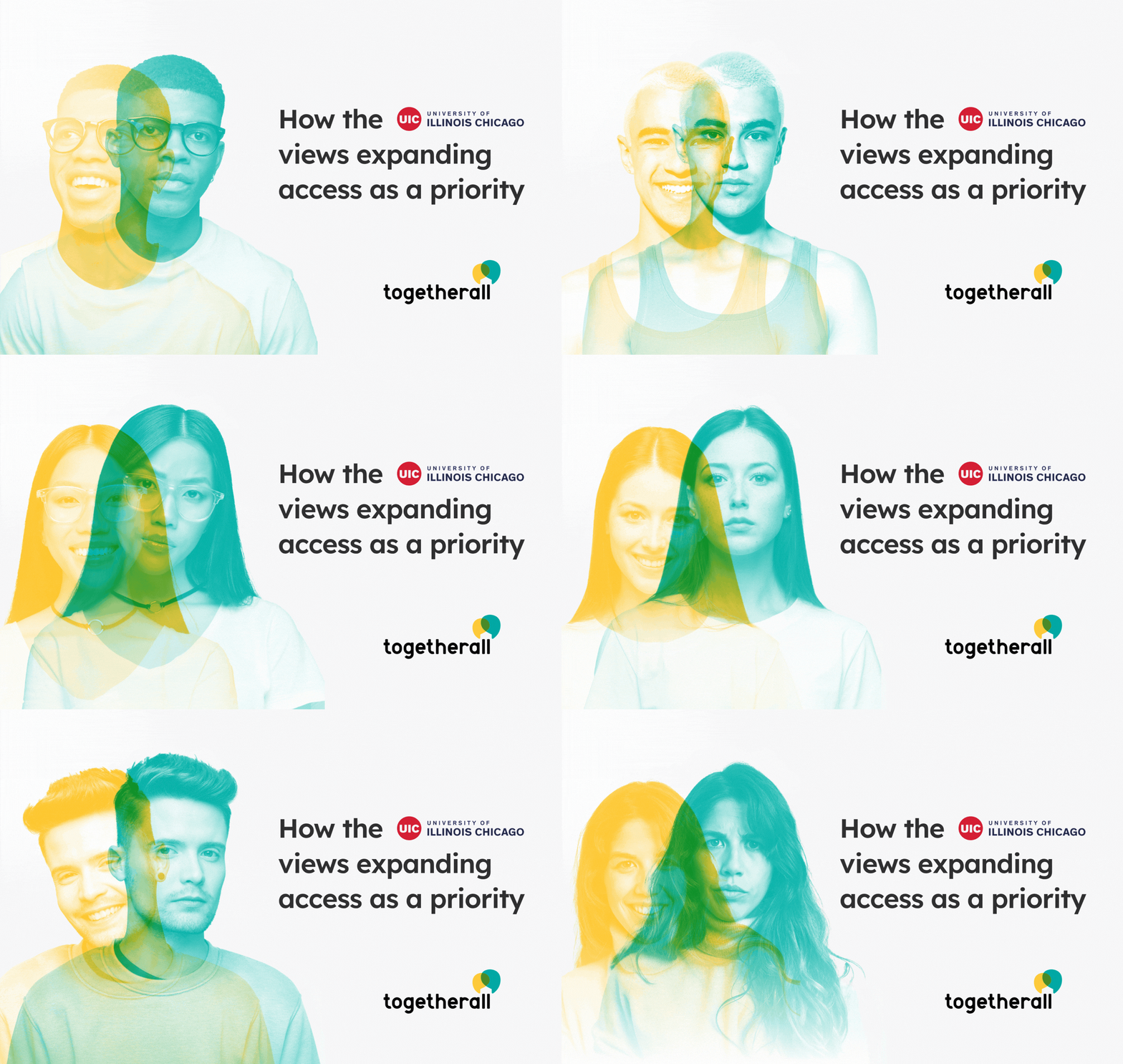
In our recent webinar, Togetherall’s Dr. Ben Locke and Dr. Shenay Bridges-Carter of the University of Illinois Chicago (UIC) discussed the considerations of treating access as an outcome when evaluating ROI in mental health services, with insight into UIC’s approach in supporting students.

How expanding access to support can lead to increased retention and improved overall wellbeing within a student population.
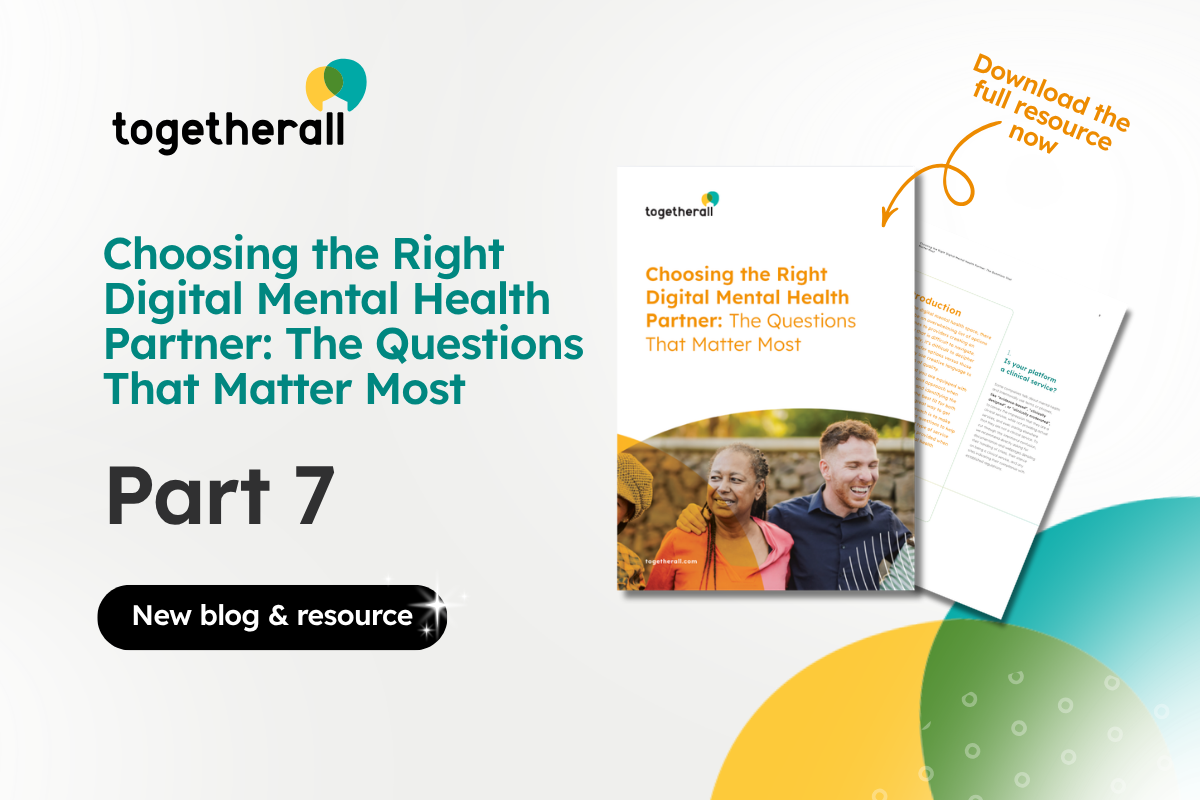
The seventh and final part in a seven-part series from Togetherall's Chief Clinical Officer, Dr. Ben Locke – practical questions to ask when evaluating digital mental health providers and cutting through the noise.
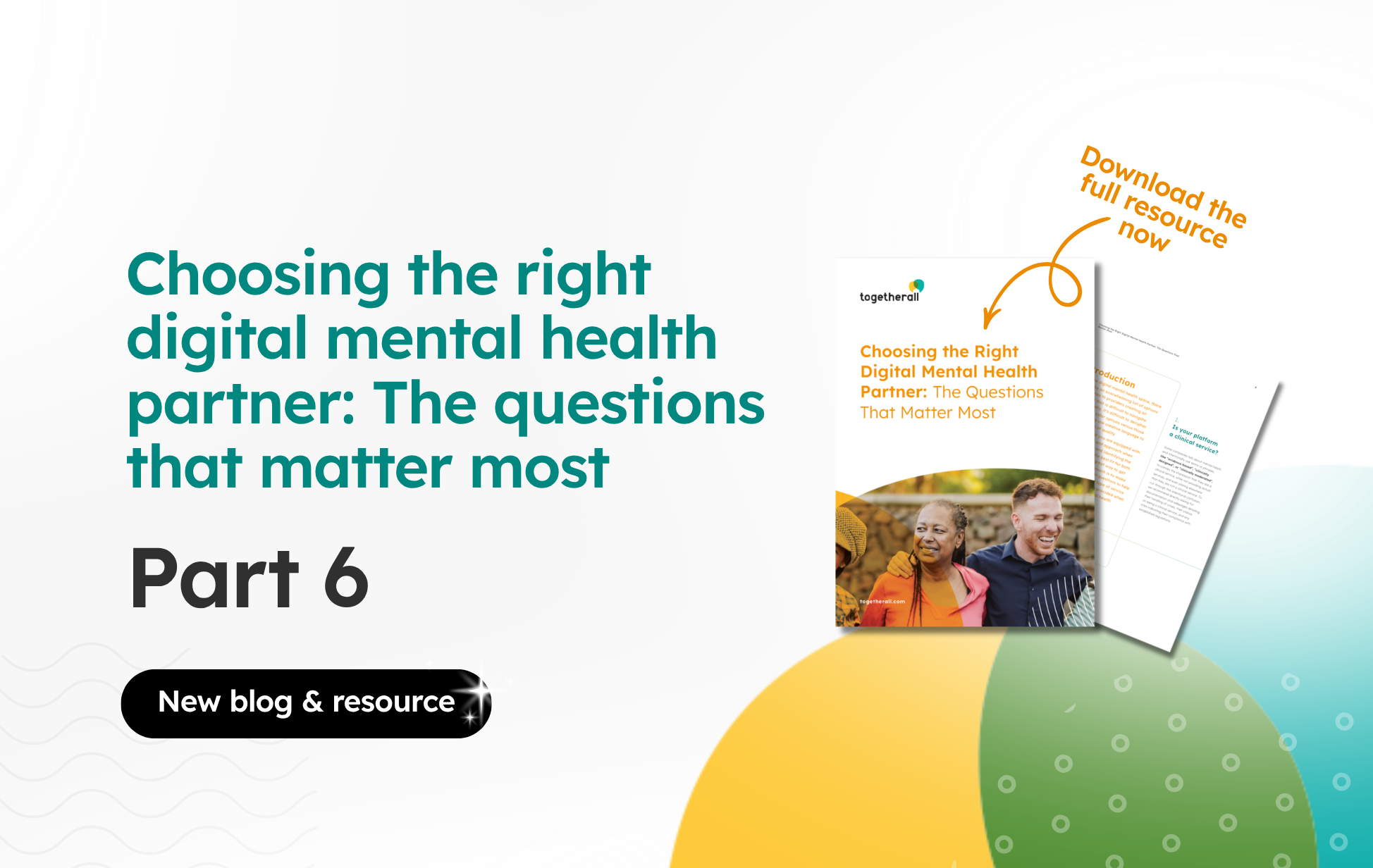
The sixth in a seven-part series from Togetherall's Chief Clinical Officer, Dr. Ben Locke – practical questions to ask when evaluating digital mental health providers and cutting through the noise.

By expanding access to safe, scalable mental health support, employers can strengthen wellbeing, reduce barriers to care, and build a more connected, resilient workforce.

Why reaching the “invisible students” is the future of campus mental health
The fifth in a seven-part series from Togetherall's Chief Clinical Officer, Dr. Ben Locke – practical questions to ask when evaluating digital mental health providers and cutting through the noise.
The fourth in a seven-part series from Togetherall's Chief Clinical Officer, Dr. Ben Locke – practical questions to ask when evaluating digital mental health providers and cutting through the noise.
Get the latest mental health insights to your inbox.