Self-Compassion: What It Is, What It Isn’t and How to Practice It
It’s easy to think about the concept of “compassion” -- it encompasses all the good qualities we value in other people, like selflessness, consideration, kindness, and tenderness.
However, it’s harder for most of us to understand and enact compassion for ourselves in moments of distress – i.e., self-compassion. Sometimes we might think that if we aren’t hard on ourselves or judgmental about our mistakes, that we won’t be productive, that we might fall behind, or we won’t improve, according to self-compassion researcher, Dr. Kristin Neff.
Self-compassion can help because it is not about letting ourselves off the hook or not being accountable for mistakes or feelings. Instead, self-compassion is about being understanding, kind, and realistic towards ourselves and our place in the bigger world.
What is self-compassion?
Self-compassion can be thought of as a specific way to approach yourself in difficult situations – just as you might take a particular approach with a friend, family member, employee, co-worker, or child. It offers specific strategies for us to be kinder to ourselves while understanding that life doesn’t always go the way we planned. It’s easy for us to feel like life “should” be a certain way (easy, happy, without obstacles, etc.), and when things don’t go to plan, we can feel even worse.
Self-compassion allows us to be realistic – to understand that a tough situation is well, tough. When we are faced with feelings of failure or shortcomings, self-compassion suggests that we tell ourselves, “This is difficult” and asking, “What can I do to comfort myself right now?”
Self-compassion in its simplest form is a way for us to honor and accept that we’re human.
How to practice self-compassion
Self-compassion is important because it provides clear and straightforward ways for us to manage our emotions and difficult feelings. But what does self-compassion look like in practice? If you’re finding yourself being overly self-critical and stressed, try some of these practices:
- Be kind – treat yourself as you’d treat a close friend. If your friend is upset, angry, or hurt, you might be there to offer a hug, kind words, or attentive listening. Give yourself this same comfort and non-judgmental attentiveness when you’re experiencing difficult circumstances.
- Acknowledge that dealing with setbacks, frustrations, failures, and mistakes is part of being human. You cannot learn how to walk without falling down. This mindset can help us ease stress, tension, and reduce unhelpful thoughts by recognizing and accepting that we are all going through similar experiences.
- Observe, label, and accept what you’re feeling rather than judging yourself in response to the feeling. For example, if you find yourself getting upset at something and thinking “I’m a horrible person for being upset,” try this instead: “I’m upset, and that’s okay; being upset doesn’t make me a bad person.” Allowing ourselves to mindfully observe a feeling without engaging in reactive judgments allows us to experience authentic feelings (that are normal) without jumping to negative judgements.
Self-compassion allows us to recognize we’re not alone and that having setbacks or strong feelings is part of the human experience.
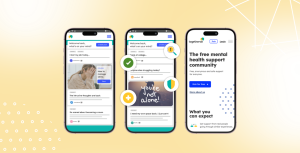
By showing ourselves kindness, we can relate to others, feel more connected to ourselves, and to the world around us. If you find yourself feeling down, or just not like yourself, try Togetherall.
As well as self-help tools and resources to support wellbeing and mental health, Togetherall offers a safe and anonymous community where people can connect to share their experiences.
To read more health and wellbeing articles, head to our Support Articles page.